Work · 04 of 7
CarbonKind
Carbon capture for India's brick kilns, turning captured CO₂ into carbonates industry can buy.
01The brief
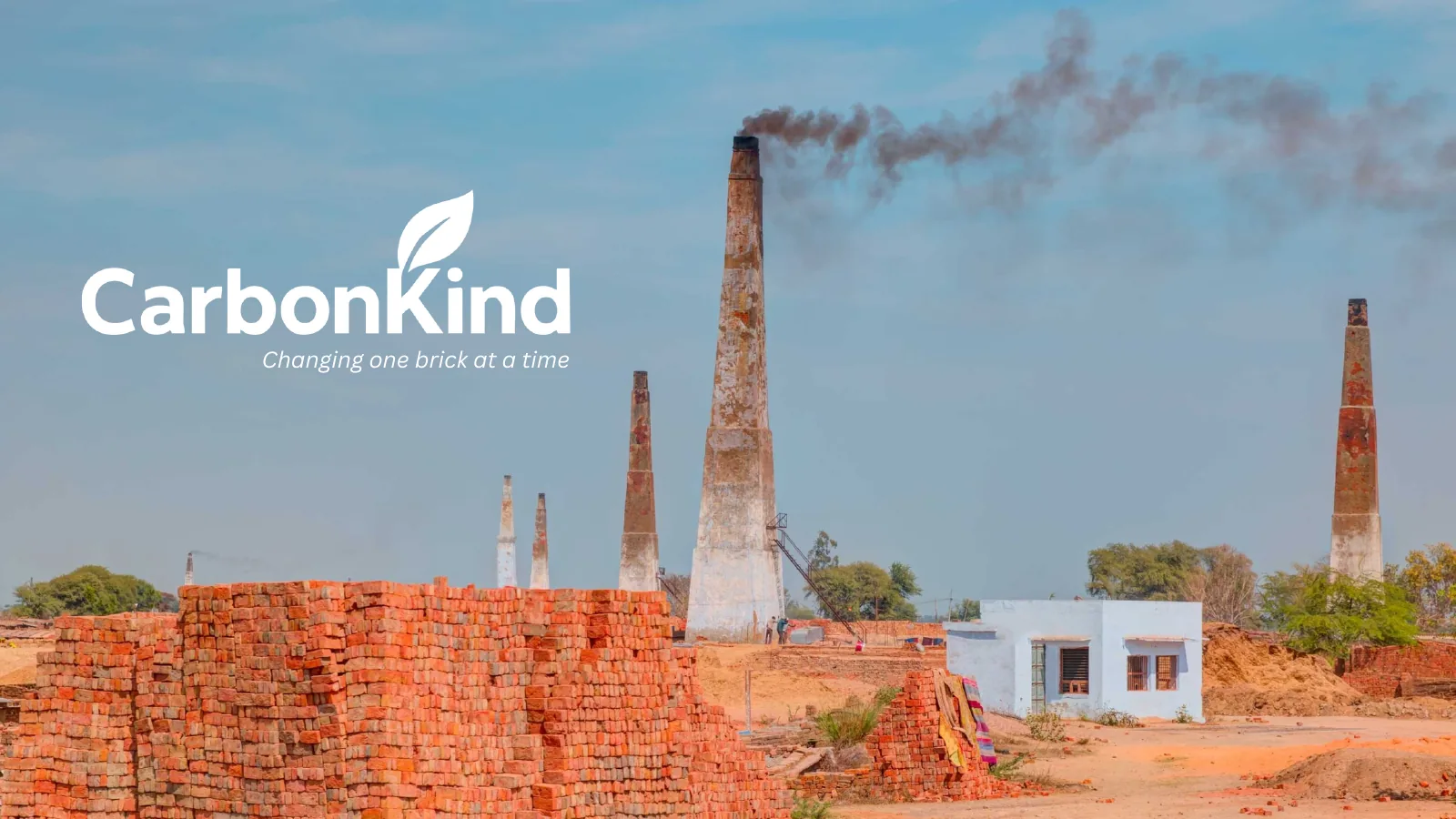
India is the world's second-largest brick producer after China. Brick kilns pollute the air, deplete the water table and degrade land, and existing regulations mostly set how far a kiln must sit from water, roads and other kilns.
We mapped the brick-making process step by step, from clay mining to transport, to find where change would matter most.
02The insight
Most of a brick's emissions come from one step: firing. Fix the kiln, not the whole chain.
- Every stage has a cost: clay mining, mixing, moulding, firing, cooling and transport.
- Firing in the kiln is the heart of the emissions, so it is where the intervention has to sit.
- Captured carbon only scales if someone wants to buy what it becomes.
03The concept
CarbonKind integrates carbon capture and utilisation (CCU) into brick clusters, with UrjanovaC as the proposed technology partner.
- UrjanovaC's systems capture CO₂ from kiln emissions and convert it into stable carbonate minerals.
- CarbonKind deploys the systems across emission-heavy brick clusters and sells the carbonates to cement, paint, paper, plastics and agriculture.
- Captured carbonates are tested in fly ash bricks, with kilns gradually converted to fly ash production.
- Shared value: profit for CarbonKind, job security for workers, scale for UrjanovaC, and training for kiln owners on cleaner alternatives.
04The outcome
Submitted to a sustainability forum, where CarbonKind won Best Ideation and Concept.
BestIdeation and Concept award